How to Locate Your Main Water Shut-Off Valve in a West Chester Home
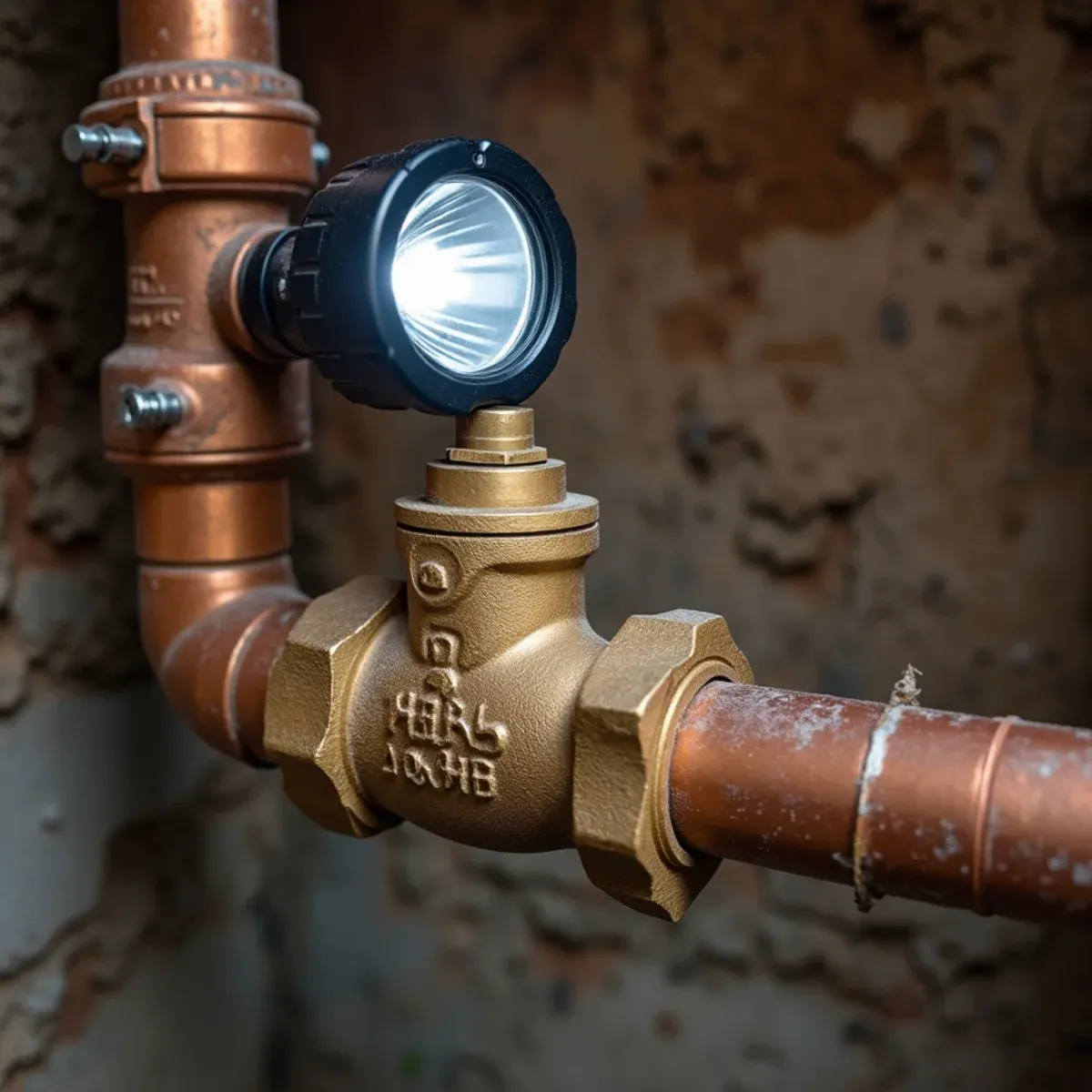
To find your main water shutoff valve in a West Chester home, inspect the interior perimeter basement wall facing the street where the municipal water service pipe enters through the foundation floor or stone masonry, located directly adjacent to your water meter and pressure regulator before branching to household fixtures.
When a pressurized water supply line ruptures inside an upstairs ceiling or a washing machine hose splits, an unrestricted municipal water service delivers between 10 and 20 gallons of water per minute into your home. Within just 15 minutes, over 250 gallons of water can cascade through drywall ceilings, subflooring, and hardwood finishes. In that terrifying moment, searching aimlessly behind clutter for an elusive shut-off valve costs thousands of dollars in avoidable structural devastation. Across Chester County—from historic 19th-century brick rowhomes in the borough to post-war split-levels in Downingtown and modern suburban developments in Exton—main shutoff valves hide in predictable locations once you understand your home's unique architectural framework.
The 60-Second Emergency Rule: Why Every Minute Counts
Under typical Chester County municipal supply pressures (ranging from 55 to 80 PSI), an open 3/4-inch severed copper or PEX pipe discharges up to 1,200 gallons per hour. That is the equivalent of filling an entire residential swimming pool directly onto your living room rug in an afternoon.
Every adult and teen in your household should know the exact physical location of your home's primary shut-off valve, verify that the handle moves freely without leaking, and understand how to depressurize standing line volume (see our burst pipe emergency response guide).
Main Water Shutoff Locations by Chester County Architectural Style
Identify your property's construction style in this location reference table to quickly locate your primary shutoff valve:
| Home Architectural Style | Chester County Neighborhoods | Primary Shutoff Location | Incoming Line Material | Emergency Access Hurdles |
|---|---|---|---|---|
| Historic Brick Rowhouse / Twin | West Chester Borough Core | Basement front wall (street side) | 1-inch Copper or Lead Stub | Often concealed behind paneling or workbench |
| Mid-Century Split-Level / Ranch | East Goshen / West Goshen | Lower-level utility room or crawlspace | 3/4-inch Copper or Galvanized | Hidden behind water heater or HVAC ducting |
| Suburban Colonial with Basement | Exton / Downingtown suburbs | Front corner basement near street | 1-inch Uponor PEX or Copper | Often enclosed in drywall chase during basement finishing |
| Slab-on-Grade / Townhome | Modern planned communities | Ground-floor utility closet or garage | 3/4-inch PEX or CPVC | Behind water heater access panel or manifold cabinet |
| Rural Property on Private Well | Pocopson / Willistown / Kennett | Basement well pressure tank manifold | 1-inch Polyethylene Well Pipe | Electrical pressure switch must also be powered off |
Where to Find Your Main Shut-Off: Basements, Utility Closets, and Crawlspaces
Follow these specific visual inspection cues to trace the line from the street into your living space:
Can't find your main shut-off or valve is seized?
Live dispatchers answering 24/7. Firm price before any work begins.
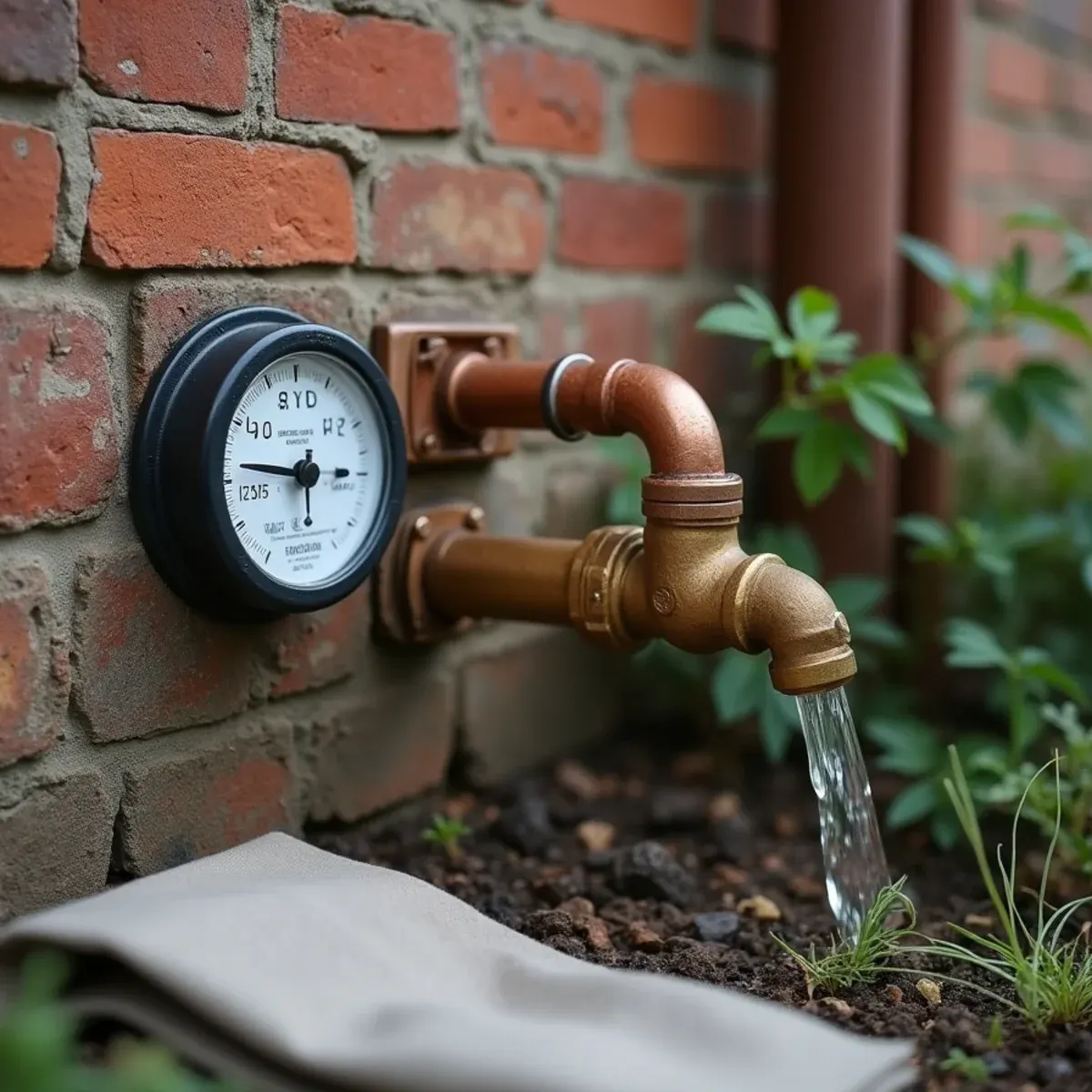
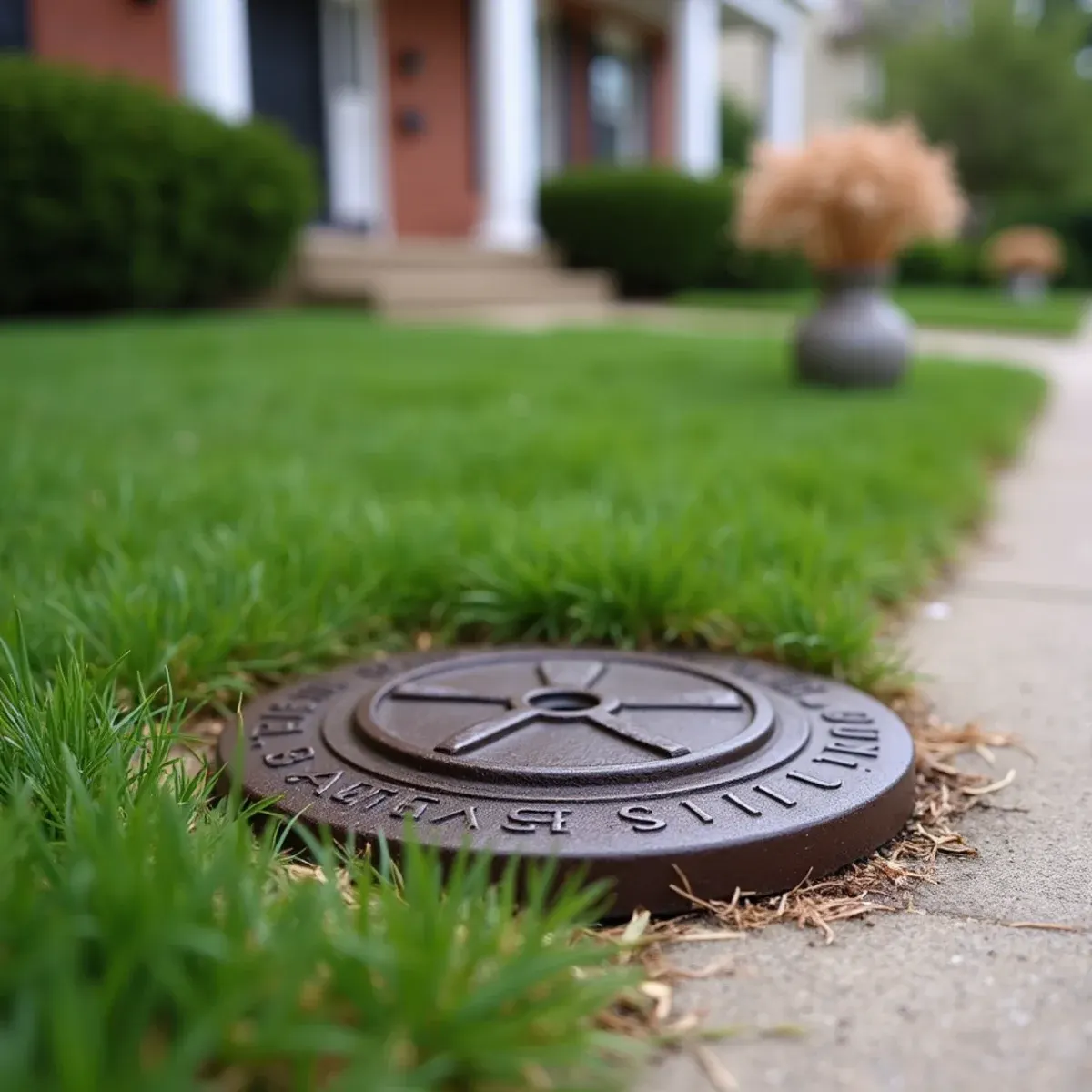
The Outdoor Municipal Curb Stop Box: The Secondary Safety Valve
If your interior shut-off valve is seized, leaking around the stem, or completely inaccessible during a catastrophic basement flood, your secondary line of defense is the outdoor municipal curb stop box:
Gate Valves vs. Quarter-Turn Ball Valves: Why Antique Round Wheels Fail
The type of valve installed on your main water service determines how reliably it will operate during an emergency:
The 5-Step Emergency Main Water Shutoff & Depressurization Protocol
When a major leak occurs, execute this exact mechanical sequence:
Rotate the Main Valve Handle to the Off Position
For lever ball valves, rotate the handle 90 degrees until it forms a right angle across the pipe. For round gate valves, turn clockwise ('righty-tighty') until it seats firmly. Never use a pipe wrench or cheater bar on a stubborn gate valve.
Open Lowest-Level Faucets to Drain Trapped Water
Shutting the main valve stops fresh municipal water from entering, but 20 to 50 gallons of pressurized water remains trapped in upper pipes. Immediately open basement laundry tub faucets or an outdoor hose spigot to drain standing pipe volume safely into a drain.
Open Highest-Level Faucets to Vent Vacuum Locks
Open top-floor bathroom sink faucets and shower valves. This allows atmospheric air into the piping network, breaking the siphon vacuum and allowing all water in vertical risers to drain out the basement taps rather than leaking through ceilings.
Power Down Your Water Heater
Flip the double-pole 240V circuit breaker for an electric water heater, or rotate the gas valve dial to 'PILOT' or 'OFF.' Draining supply lines can create empty pockets inside the water heater tank that instantly burn out electric heating elements.
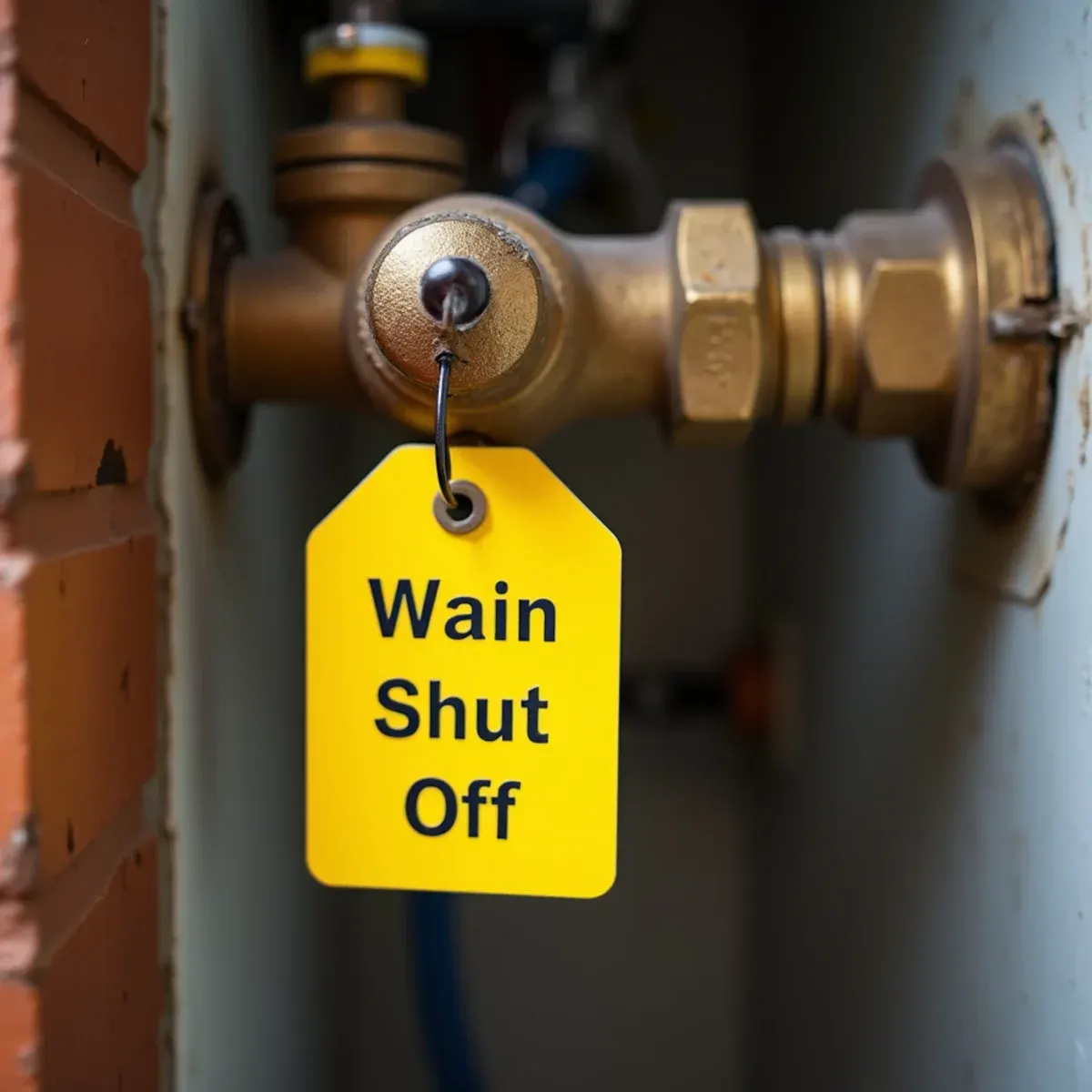
Tag Your Main Shutoff Valve for Household Visibility
Hang a heavy-duty yellow or red plastic tag labeled 'MAIN WATER SHUTOFF' directly on the valve lever. Ensure babysitters, house guests, and family members know where it is located.
Main Valve Upgrades & Emergency Plumbing by Madrid Plumbers
When your main water shut-off valve fails or requires replacement, Madrid Plumbers provides immediate mechanical support:
Have a Plumbing Emergency Right Now?
Do not wait for water damage to escalate. Call Madrid Plumbers at (858) 363-8298 for immediate local dispatch.
Frequently Asked Questions
Helpful clarifications related to this guide.
For a lever-handle ball valve, rotate the handle 90 degrees so that the lever is perpendicular (at a right angle) to the water pipe. For an older round-wheel gate valve, turn the wheel clockwise ('righty-tighty') until it comes to a complete, firm stop.
Have a question not listed here? Speak with an on-call plumber at (858) 363-8298
Relevant Plumbing Services
Nearby Communities Covered
Continue Reading
Need Advice on Your Home's Plumbing?
For non-emergencies, send us a question or service request. For active leaks or backups, call 24/7.