
Warning Signs of a Failing Cast Iron Drain Stack in Older Homes
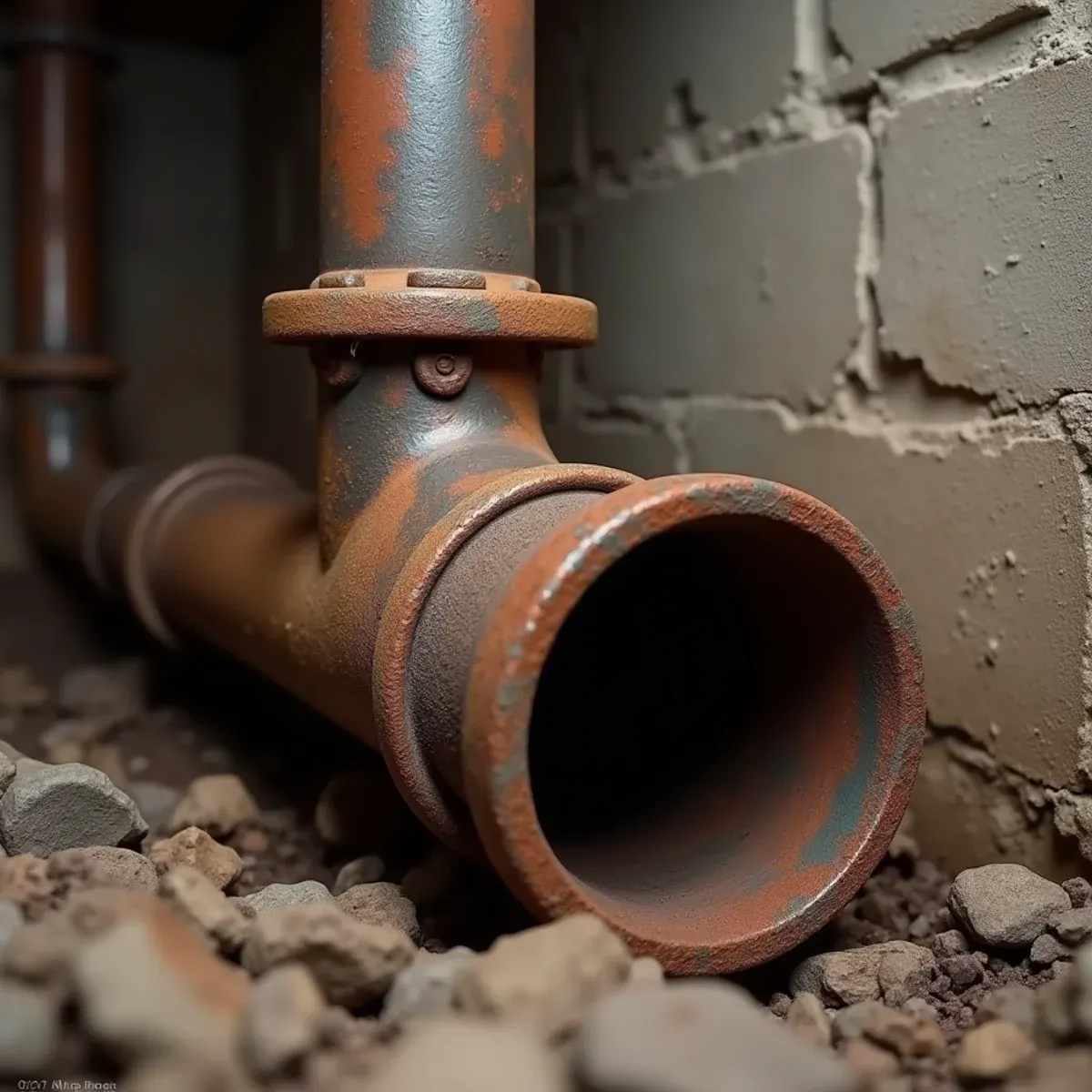
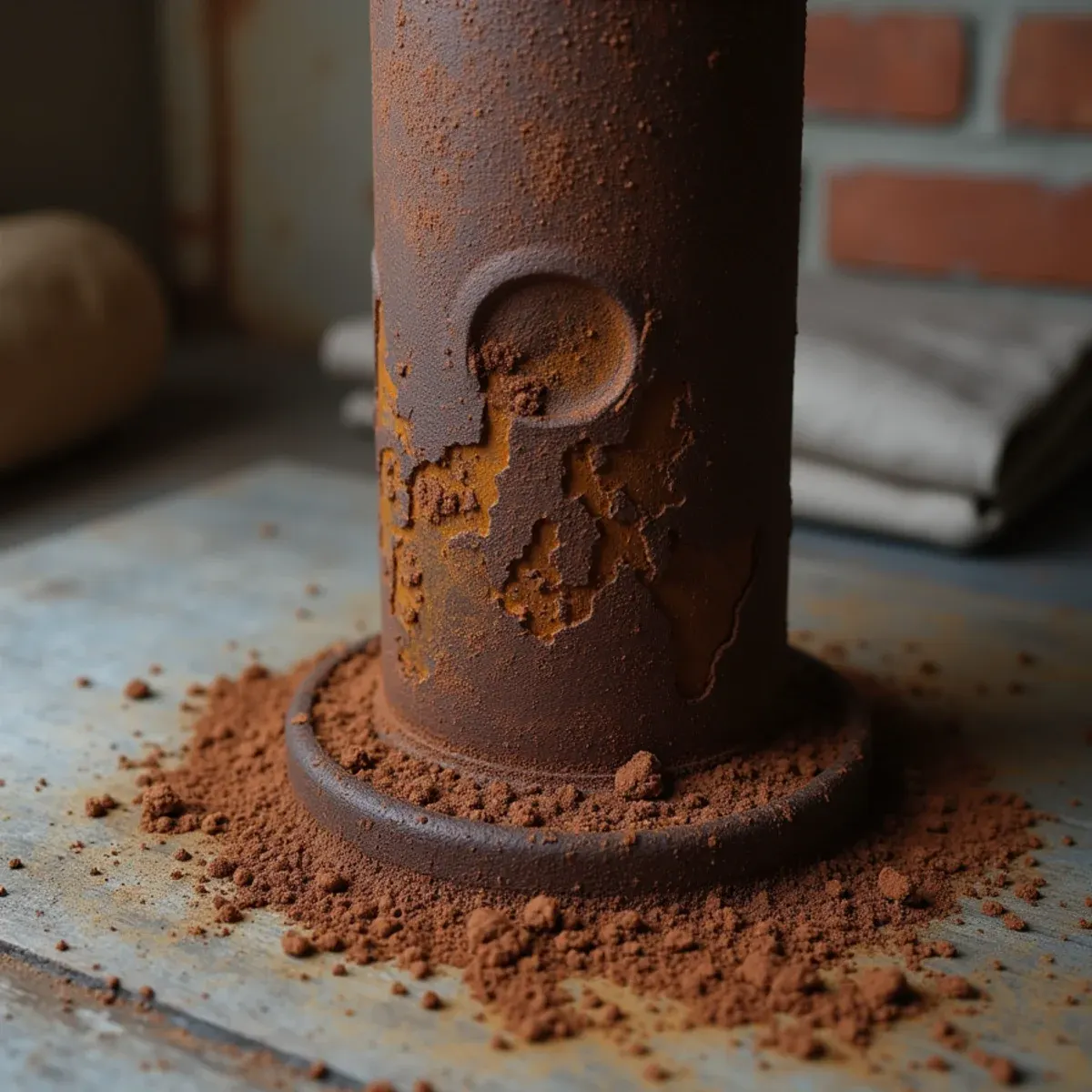
The primary signs of a failing cast iron drain stack include dark rust flakes crumbling from the exterior, weeping vertical seam cracks, persistent sewer gas odors in living areas, and chronic basement cleanout backups caused by internal iron scale constriction. Because pre-1975 cast iron pipes corrode from the inside out, visible dampness indicates structural wall failure requiring immediate professional inspection and modern PVC transition.
Throughout West Chester, Broomall, and Kennett Square, thousands of historic colonial, mid-century ranch, and early suburban residences rely on a central vertical cast iron soil stack. This heavy pipe serves as the critical drainage and venting artery of the entire plumbing system, gathering wastewater from upper-story bathrooms and venting sewer fumes through the roof. However, after 50 to 80 years of exposure to moisture, caustic household chemicals, and corrosive hydrogen sulfide gas, these legacy iron stacks inevitably reach the end of their operational lifespan.
Critical Warning Signs of Cast Iron Stack Deterioration
Unlike modern plastics, cast iron does not fail overnight with a sudden clean snap. Instead, it undergoes a protracted decomposition process known as graphitic corrosion, where iron dissolves while leaving a soft, brittle carbon matrix intact. Homeowners often assume their plumbing is sound because fixtures still drain, unaware that wastewater is slowly leaching inside finished walls or subfloors.
Suspect your vintage cast iron stack is leaking or failing?
Live dispatchers answering 24/7. Firm price before any work begins.
The Chemistry of Failure: Channel Rot & Acid Vapor Condensation
Understanding why cast iron stacks fail requires looking at two distinct corrosion dynamics operating within the same drainage system: liquid channel erosion along horizontal runs and gas vapor attack in vertical stacks.
Along horizontal basement branches and under-slab laterals, wastewater does not fill the entire pipe diameter. Instead, acidic graywater and toilet wastewater flow along the bottom third of the pipe. Over decades, acidic compounds, drain-cleaning chemicals, and abrasives carve an inverted canyon into the bottom of the pipe—a catastrophic phenomenon known as 'channel rot.' Eventually, the bottom floor of the pipe corrodes away completely, discharging effluent directly into basement soil or slab aggregate.
Conversely, the upper vertical section of the stack—which serves primarily as a vent—suffers from airborne chemical corrosion. Anaerobic bacteria in the public sewer or septic tank produce hydrogen sulfide gas (H2S). When this gas rises into the cool vent pipe, it reacts with moisture and oxygen to form dilute sulfuric acid (H2SO4). This aggressive acid condenses on the interior pipe walls, eating through the metal from the top down.
Drainage Material Comparison: Cast Iron vs. Modern PVC & ABS
When replacing a compromised cast iron stack, homeowners must weigh material longevity, acoustic properties, and installation demands. The table below outlines how legacy cast iron compares against modern DWV (Drain-Waste-Vent) piping systems utilized across Chester County homes:
| Piping Material | Expected Lifespan | Corrosion Vulnerability | Acoustic Dampening | Thermal Expansion | Weight / Linear Ft | Relative Cost Factor |
|---|---|---|---|---|---|---|
| Legacy Cast Iron (Bell & Spigot) | 50–70 Years | Severe (Acids, H2S, Tuberculation) | Superior (Dense, quiet water flow) | Minimal (0.007 in/100ft/°F) | 14–22 lbs/ft | High (Labor intensive) |
| Modern No-Hub Cast Iron | 75–100 Years | Moderate (Requires epoxy coatings) | Superior (Whisper quiet) | Minimal | 12–18 lbs/ft | Very High (Specialized commercial) |
| Schedule 40 Solid-Core PVC | 100+ Years | Immune to acids & sewer gases | Moderate (Flow noise audible) | High (Requires thermal loop) | 2.0–2.8 lbs/ft | Economical / Industry Standard |
| Cellular Core PVC (DWV Foam) | 75–100 Years | Immune to acids & sewer gases | Low (Louder flow vibrations) | High (Expansion fittings needed) | 1.4–1.9 lbs/ft | Lowest Cost (Not recommended for multi-story) |
For the vast majority of residential restorations in West Chester, solid-core Schedule 40 PVC is the gold standard. To address the acoustic difference—since water cascading through thin plastic sounds louder than through dense iron—Madrid Plumbers wraps newly installed vertical PVC stacks with high-density mineral wool or closed-cell acoustic lagging prior to wall re-closure.
5-Step Professional Protocol for Replacing a Cast Iron Stack
Replacing a multi-story vertical cast iron stack is one of the most mechanically demanding tasks in residential plumbing. A single 4-inch cast iron pipe extending from the basement to the roof weighs between 400 and 900 pounds. Cutting into it without proper structural bracing can cause the upper stack to shear free and crash through lower floors. Here is the surgical protocol our licensed technicians follow:
Structural Load Clamping & Joist Securing
Before a single cut is made, technicians install heavy-duty steel friction riser clamps around the stack at every floor level. These clamps span across load-bearing floor joists to mechanically support the weight of the upper piping assembly, ensuring zero vertical movement or downward shifting.
Surgical Snap Cutting & Resection
Using specialized ratchet chain snap cutters or diamond-blade reciprocating saws, technicians cleanly shear through the brittle cast iron pipe. This clean-cut technique prevents shattering or sending jagged metal shrapnel down into the sub-slab municipal building drain.
Shielded Stainless Steel Transition Coupling
Connecting modern PVC to remaining sound cast iron requires heavy-duty ASTM C1460 shielded transition couplings (such as Fernco ProFlex or Mission bands). These feature a full stainless steel outer shield that prevents pipe misalignment, shear displacement, and rubber degradation over decades.
Schedule 40 PVC Re-framing & Sanitary Branch Alignment
The rotted vertical assembly is rebuilt using solid-core Schedule 40 PVC pipe, sweep sanitary tees, wye fittings, and code-compliant cleanout tees. Branches servicing bathrooms and kitchens are repitched to ensure a minimum 1/4-inch per foot gravitational fall.
Hydrostatic Head Testing & HD Video Verification
The new drainage stack is plugged and subjected to a hydrostatic head test to prove 100% watertight integrity under head pressure. Our crew then sends an HD sewer inspection camera down the basement cleanout to confirm the sub-slab transition is completely clear of construction debris.

Why Quick Spot Repairs on Rotted Cast Iron Always Fail
When facing a leaking cast iron stack, homeowners are often tempted by handyman fixes: applying epoxy putty, slapping on an automotive rubber sleeve with hose clamps, or wrapping fiberglass exhaust tape around the crack. In the plumbing engineering trade, these measures are recognized as dangerous false security.
When cast iron starts leaking through a hairline fracture, the structural integrity of the metal surrounding that crack has already been compromised by deep graphite decay. Clamping a rubber sleeve tightens mechanical stress against paper-thin pipe walls, frequently triggering a much larger fracture just inches away. Furthermore, patches do nothing to resolve the severe internal rust tuberculation choking drainage flow or the sulfuric acid vaporing off the interior roof vent.
Historic cast iron stacks use bell-and-spigot joints sealed with molten lead over compressed oakum jute fiber. Applying mechanical torque or vibration during an unassisted DIY repair loosens these delicate bell seals up and down the stack, creating new hidden water leaks inside upper ceiling cavities.
Comprehensive Drain Stack Restoration by Madrid Plumbers
At Madrid Plumbers, our master plumbers specialize in historic and vintage home plumbing across Chester and Delaware Counties. Whether you reside in a 1920s brick twin in the West Chester Borough, a 1950s ranch in Broomall, or a historic farmhouse in Kennett Square, we bring the proper tooling, structural rigging, and municipal code expertise to restore your drainage system safely.
We handle all municipal permitting with local building departments (such as West Goshen Township, West Chester Borough, and Marple Township), secure full structural certifications, provide acoustic insulation upgrades, and back every stack replacement with our comprehensive workmanship warranty.
Protect your home from catastrophic drainage stack collapse.
Live dispatchers answering 24/7. Firm price before any work begins.
Have a Plumbing Emergency Right Now?
Do not wait for water damage to escalate. Call Madrid Plumbers at (858) 363-8298 for immediate local dispatch.
Frequently Asked Questions
Helpful clarifications related to this guide.
In Pennsylvania homes, cast iron drain stacks typically have an effective lifespan of 50 to 75 years. Factors such as local water hardness, excessive use of caustic chemical drain cleaners, and high sulfur gas concentrations in municipal sewer systems accelerate internal corrosion and shorten this window.
Have a question not listed here? Speak with an on-call plumber at (858) 363-8298
Relevant Plumbing Services
Nearby Communities Covered
Continue Reading
Need Advice on Your Home's Plumbing?
For non-emergencies, send us a question or service request. For active leaks or backups, call 24/7.